


 1-800-548-4639
If you haven’t filed your taxes yet, you could already be getting charged penalties — and they increase every month.
If you have IRS back taxes or unfiled returns, the most important thing to know is this: you still have time to reduce the damage, but you should act now. A lot of people assume they need to have the money before they file. That is not true. In most cases, filing is the first priority, even if you cannot pay the full balance right away.
With the tax deadline approaching fast, many people are asking the same questions: What happens if I do not file? What if I cannot pay? How far can this go with the IRS? The good news is that these situations are usually fixable. The bad news is that waiting tends to make them more expensive and more stressful.
Below is a simple breakdown of what happens with back taxes, why filing matters, and what steps to take now if you are behind.
Why Filing Matters More Than Most People Realize
When people fall behind on taxes, they often freeze because they are worried about what they owe. That is understandable, but it leads to one of the biggest mistakes people make: not filing at all.
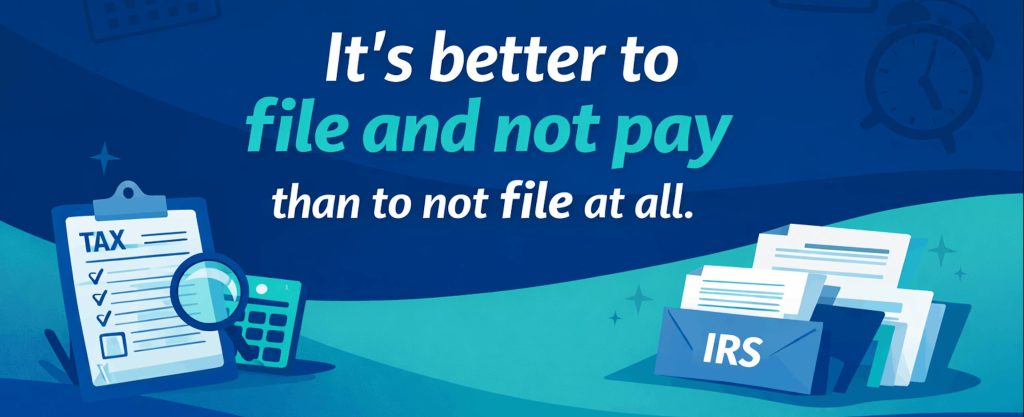
The IRS treats late filing and late payment differently. If you do not file, the penalties are generally much steeper than if you file and still owe money. In other words, filing now can help limit how much the problem grows.
Even if you are missing documents, unsure how much you owe, or know you cannot pay in full, filing is often the move that puts you back in control. It shows action, reduces certain penalties, and opens the door to payment options or other resolution strategies.
What Happens If You Do Not File Your Taxes
The longer you wait, the more this can cost you.
If you’re dealing with back taxes or unfiled returns, getting clarity now can help you avoid additional penalties.
If you miss the filing deadline, the issue does not usually turn into a crisis overnight. That is part of why people continue to put it off. But behind the scenes, the problem keeps moving in the wrong direction.
Here is what can happen when you do not file:
- Penalties begin adding up
- Interest continues to accrue
- The IRS may send notices
- Your account can move closer to collections
- The IRS may eventually file a return for you
That last point is especially important. If the IRS files a return on your behalf, it is often based on income information they received, but without giving you the benefit of deductions, credits, or a more favorable filing position. That can lead to a balance that is much higher than it would have been if you filed the return yourself.
Back Taxes vs. Unfiled Returns
These two issues are related, but they are not exactly the same.
Back taxes generally mean you owe taxes from a prior year that remain unpaid. Maybe you filed already and could not pay, or maybe penalties and interest have continued to grow over time.
Unfiled returns mean one or more tax returns were never submitted in the first place. This can be more serious because the IRS tends to be less flexible with people who have not filed than with people who filed but still owe.
In many cases, people are dealing with both. They may have one or more missing tax returns and also owe money for prior years. The right strategy usually starts with getting the filing issue addressed first.
You Do Not Need to Pay in Full to File
This is one of the most common misunderstandings we see.
You do not need to pay your entire tax balance in order to file your return. Filing and paying are two separate issues. If you can file on time or as soon as possible, you may reduce the penalties tied to not filing, even if you still owe a balance afterward.
If you can pay something, even a partial payment can help. But if you cannot, that should not stop you from filing. Waiting until you have all the money often creates a worse outcome.
What If You Cannot Afford to Pay the IRS?
If you owe the IRS and cannot pay in full, you are not alone. Many taxpayers end up in this situation. What matters most is how you respond.
Depending on your circumstances, there may be options available, such as:
- Monthly payment arrangements
- Resolution programs based on financial hardship
- Other strategies to help bring your account into compliance
The important thing is to avoid doing nothing. The IRS is often more willing to work with people who take action than with people who continue to ignore the problem.
How to Start If You Have Unfiled Returns
If you have not filed one or more years, the idea of catching up can feel overwhelming. The good news is that it can usually be broken into manageable steps.
1. Gather your tax documents
Start with any W-2s, 1099s, prior tax returns, and income records you already have. If you are missing documents, that does not necessarily stop the process. There are ways to reconstruct the information needed to prepare returns.
2. Find out which years are missing
Some people know exactly which years were not filed. Others are unsure. Confirming what is missing is an important first step so you can build the right plan.
3. File the required returns
Once the missing years are identified, the next step is preparing and filing the correct returns for those years. This is where many people benefit from professional guidance, especially if there are multiple years involved or larger balances at stake.
4. Review what you owe and your options
After the returns are filed, you can assess the balance, penalties, and the best path forward. In some cases, the actual result is better than expected, especially when the taxpayer had credits or deductions that were never claimed.
What If You Have Not Filed in Several Years?
The longer someone goes without filing, the more intimidating it can feel. But this is still a common problem, and it can still be addressed.
If you have multiple years of unfiled returns, it becomes even more important to handle things strategically. Filing the wrong way, filing incomplete information, or continuing to wait can create unnecessary complications. A structured approach can help you determine what needs to be filed, what the IRS may already have on record, and how to move forward with the least disruption possible.
Common Mistakes to Avoid
If you are behind on taxes, try to avoid these common errors:
- Waiting until you can pay everything
- Ignoring IRS notices
- Assuming the IRS has forgotten
- Trying to guess your way through multiple years of tax issues
- Putting it off because the situation feels stressful
The longer the delay, the fewer options you may have and the harder the situation can become to untangle.
What You Should Do Right Now
If you are dealing with back taxes or unfiled returns and the deadline is close, focus on these priorities:
- Do not ignore the issue
- File as soon as possible, even if you cannot pay in full
- Get clear on which years are involved
- Review your resolution options before the problem grows
You do not need to have every answer today. You just need to take the next step before the situation gets worse.
Need Help With IRS Back Taxes or Unfiled Returns?
If you are behind and not sure where to start, BC Tax can help you understand your options and the best path forward based on your situation.
Call us at 303-867-9938 or fill out the form below to speak with our team.
The sooner you act, the more options you may have.

Michael is the Digital Marketing Manager at BC Tax, where he leads content strategy and digital initiatives focused on helping individuals better understand complex tax topics. He works closely with the Director of Digital Marketing and internal teams to develop clear, accurate, and practical educational resources covering areas such as unfiled tax returns, IRS penalties, and tax debt resolution. Michael graduated from the University of Colorado Boulder.